

Hello, Fresh Coast Hair Co. followers!
Hair grows whether we pay attention to it or not. But what if we did?
This space exists to explore hair beyond the appointment, the product, and the trend cycle — because hair is one of the most quietly human things about us. It carries our culture, our history, our grief, our joy, and sometimes our entire political moment, all without saying a word.
The beauty industry often sells insecurity as fast as it sells shampoo. I got into this work because I believe hair deserves more respect than that.
My hope is that you leave every post here more curious than when you arrived.
Scroll on. There's a lot to explore.
Hair is more than a style — it's a statement.
When we start noticing changes in our hair, it's easy to panic. Our hair gives us style, comfort, and a sense of security, so the thought of losing it can weigh heavily on our overall well-being and mental health.
The good news is that more women are talking openly about the changes they're seeing, and research is finally catching up to those conversations. Hair loss affects far more people than you might think, women and men alike.
Below, I'll walk you through:
What's happening inside the follicle at any given time
The two types of hair loss and what triggers them
How to move forward with real results
As always if you would like to share thoughts/perspectives with me around this conversation send an email to freshcoasthaircompany@gmail.com to keep the dialogue going.
-Amanda

Hair loss and aging- lets talk about it!
-
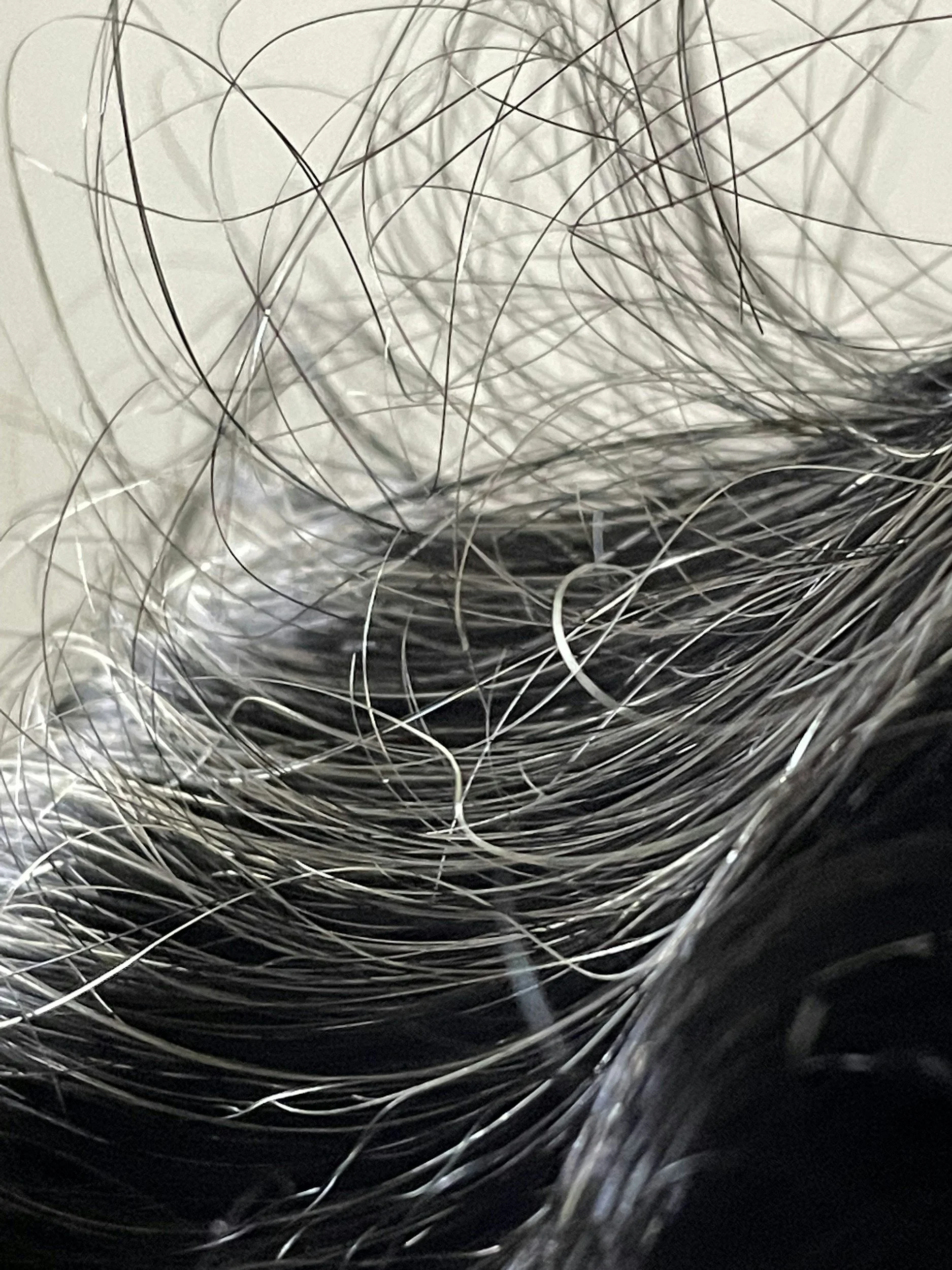
3 main growth phases
Anagen, Catagen, and Telogen
These three phases make up the cycle every hair follicle moves through, from growth to rest to renewal. Certain triggers, such as stress, illness, or hormonal shifts, can disrupt the cycle. Hormonal sensitivity can also cause the follicle itself to gradually shrink. (commonly referred to as miniaturization) Over time, that leads to hair that grows in finer, shorter, and less dense. -

What's happening in these phases
Anagen: This is the growth phase. It lasts about 2 to 7 years, and roughly 85–90% of scalp hair is in anagen at any time.
Catagen: This is a short transition phase of about 2 to 3 weeks. The follicle detaches and shrinks.
Telogen: This is the resting phase, lasting about 3 months, with roughly 10–15% of hairs in it at any time.
Disruption by triggers: Accurate. This is called telogen effluvium. Stress, illness, surgery, childbirth, or nutritional gaps push more hairs into telogen early. Shedding usually shows up 2 to 3 months later, which is why we often don't connect it to the cause.
-
Androgentic Alopecia (progressive thinning), Seasonal Hair Loss and what can I help you do about it
Testosterone is a natural hormone that everyone has, women included. On its own, it isn't the problem.
5-alpha reductase is an enzyme that naturally converts some testosterone into a stronger hormone called DHT (dihydrotestosterone).
DHT is where sensitivity comes in. Some follicles are genetically sensitive to it. When DHT binds to them, several things happen over time:
The follicle gradually shrinks (this is called miniaturization).
Hair grows back finer and weaker.
Growth cycles get shorter.
Eventually, some follicles stop producing visible hair.
The key thing to know is that this happens slowly, not overnight. That also means paying attention early makes a real difference.
Let's Talk About It
If you've noticed changes in your hair, you're not alone, and you don't have to figure it out by yourself. Let's look at what's going on together and build a plan for your scalp and your hair. For ongoing or significant shedding, I'll also encourage you to check in with a dermatologist so you have the full picture.
Davines’s NaturalTech Energizing line combines the power of nature with advanced cosmetic science. Phytoceuticals are biologically active plant molecules. They help protect, defend, soothe, and support the scalp. Complex’s combine botanical ingredients with advanced technologies to target specific scalp concerns. Featuring Green Tea Extract, Vitamin B3, a macrobiotic booster, caffeine phytoceuticals, Microalgae, and lemon balm extract these various compounds combine throughout the system to drastically reduce shedding, strengthen the follicle, and create an environment for optimal natural regrowth.
My hope is you learn a little more and feel empowered to make educated choices.
Hair loss doesn't have to feel isolating or scary. As your dedicated hair professional, I'm here to talk through the changes you're noticing over time, in a space that's safe and private. I will always do my best to provide you with education and solutions.
💛 — Amanda